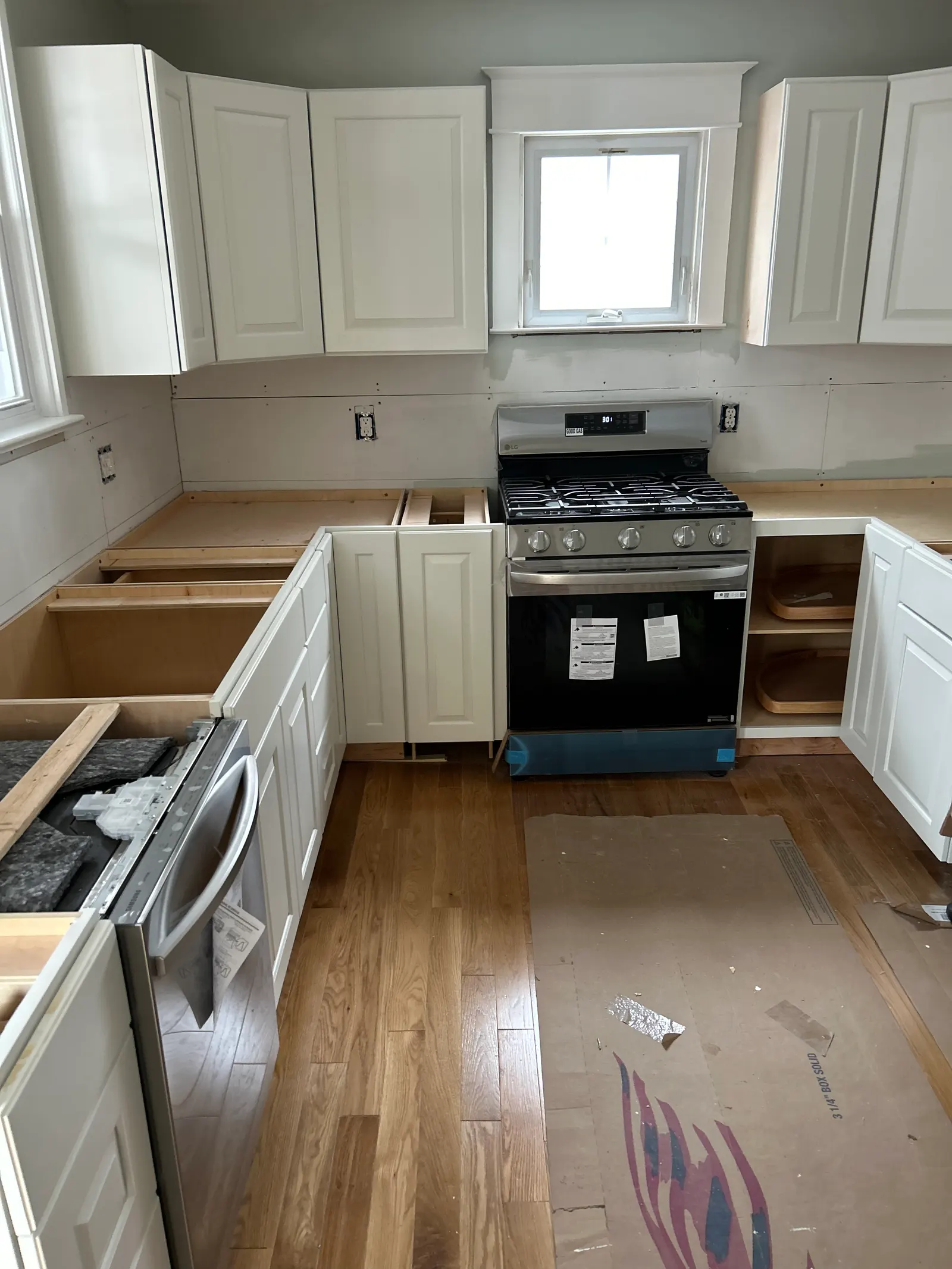
The short answer: paint, flooring, tile, and cabinets swapped in place usually don't need a permit. Moving plumbing, adding circuits, and touching anything structural almost always do. What changes between Philadelphia and the suburbs is who you apply to, what the forms look like, and what it costs.
What needs a permit under the Pennsylvania UCC
Pennsylvania has one statewide building code, the Uniform Construction Code (UCC), created by the Pennsylvania Construction Code Act of 1999. Under the UCC regulations (34 Pa. Code § 403.62), an ordinary repair does not need a permit. The regulation then spells out what is never an ordinary repair:
- Cutting away a load-bearing wall, partition, or part of one
- Removing or cutting any structural beam or load-bearing support
- Removing or changing a required exit, or rearranging rooms in a way that affects egress
- Adding or relocating water, sewer, drain, gas, waste or vent piping, electrical wiring, or mechanical systems
The same section exempts a short list of residential work outright, including fences up to 6 feet, retaining walls up to 4 feet, sidewalks and driveways 30 inches or less above grade, and uncovered decks whose floor is no more than 30 inches above grade.
Philadelphia permits: L&I, eCLIPSE and EZ permits
Inside city limits, the Department of Licenses and Inspections (L&I) issues permits, mostly online through eCLIPSE. The city exempts regular maintenance repairs, painting, papering and similar finishes, fences up to 6 feet, retaining walls up to 2 feet, replacing doors and windows in one- or two-family homes, and sheds of 200 square feet or less. Those exemptions don't apply to historic properties.
For many single-family projects you can skip drawings with an EZ permit, which L&I says typically takes about 5 business days (some issue immediately). Two standards matter most for remodeling:
- EZ Bathroom and Kitchen Alterations is a plumbing permit for remodeling an existing kitchen or bath in the same footprint in a one-family home. It covers new branch piping, fixture replacement, non-bearing partitions, drywall, subfloor and floor leveling. A Philadelphia-licensed plumbing contractor must do the work, structural changes are not allowed, and electrical work needs its own permit.
- EZ Alterations covers non-structural renovations of an owner-occupied one-family home (or a non-owner-occupied one with an engineer's report): non-bearing walls, drywall, flooring, stairs in an existing opening, and window and door replacement. Basement work is limited to spaces that already meet ceiling-height and egress rules.
Structural work, a new bathroom, or alterations in a duplex or multifamily building generally go through standard plan review, which L&I lists at 15 business days for residential alterations. One Philadelphia detail surprises people: the fee schedule includes a plumbing permit even for fixture replacement with no piping work.
Montgomery County townships: same code, local offices
In Montgomery County, each township or borough administers the UCC through its own code office or a state-certified third-party agency. The base code is the same statewide; the forms, fees, inspection scheduling and any local amendments are not. A few patterns to expect:
- Local fee schedules. Montgomery Township's 2026 schedule charges $150 for residential alterations up to $7,000 of estimated cost plus $10 per additional $1,000, a flat $150 for a direct-replacement kitchen or bath remodel, and electrical at $15 per $1,000 of electrical work.
- Third-party electrical inspections. Lower Providence Township, where we're based, requires an approved third-party agency to inspect electrical work before the rough framing inspection. West Norriton contracts its electrical inspections to an outside agency too.
- Zoning is separate. Additions, decks, sheds and fences can need a zoning review for setbacks and lot coverage even when the building side is simple.
- The state fee. Every UCC permit carries a $4.50 Pennsylvania fee on top of the township's.
Don't assume "same layout" means "no permit." Some townships, Montgomery Township included, list a permit for direct-replacement kitchen and bath remodels, so call your code office before demo day.
Philadelphia vs. Montgomery County townships at a glance
| Philadelphia (L&I) | Montgomery County townships | |
|---|---|---|
| Who issues | City L&I, online via eCLIPSE | Your township or borough code office, or its third-party agency |
| No-plans option | EZ permits for many single-family projects | Varies; many ask for a simple drawing and scope on small jobs |
| Kitchen or bath, same footprint | EZ plumbing permit by a Philadelphia-licensed plumber, plus electrical permit | Often a flat or low permit if fixtures or wiring change; check locally |
| Load-bearing wall | Standard permit with plans | Building permit, usually with an engineered beam spec |
| Alteration fee example | $76 for the first 500 sq. ft., plus $56 per extra 100 sq. ft. (one- or two-family) | Montgomery Township: $150 up to $7,000 of cost, plus $10 per extra $1,000 |
| Electrical fee example | $25 per $1,000 of electrical cost, $63 minimum | Montgomery Township: $15 per $1,000 of electrical cost |
| Added charges | $25 filing fee (credited), $3 city and $4.50 state surcharges | $4.50 state fee per permit |
| Typical timing | EZ about 5 business days; standard review 15 business days | Set by each township |
If your project needs a permit, we pull it and schedule the inspections as part of the job, in the city or in your township. Like-for-like fixture replacement is part of our work; new rough-in is done with licensed trade partners we coordinate. Ask us about your project.
Permits by project type
- Kitchens. Cabinets, counters and backsplash in the same spots are finish work. Moving the sink or range, adding circuits, or opening a wall brings in permits. See what a kitchen remodel costs for how fees fit a budget.
- Bathrooms. New tile and a same-spot vanity are often treated as ordinary repair in the townships, though some list a permit for bath remodels. In Philadelphia, plumbing fixture work runs through a licensed plumber's permit.
- Basements. Framing, new wiring and bedrooms (which need egress) mean a building permit. Philadelphia's EZ route excludes basements that aren't already habitable.
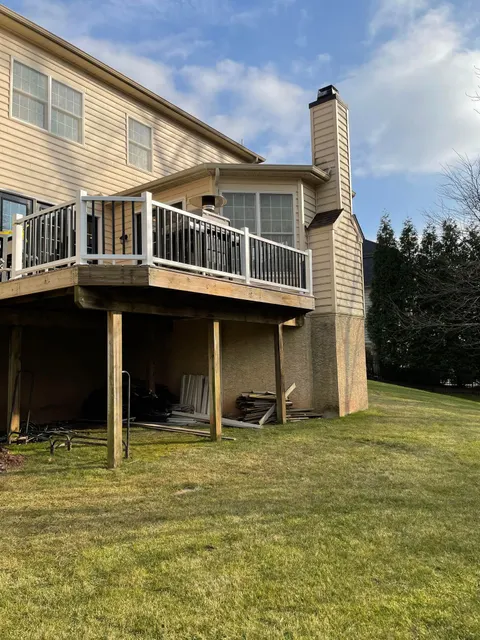
- Decks and additions. Uncovered decks 30 inches or lower are UCC-exempt, though zoning may still apply. Higher decks and every addition need a building permit.
Permitted work from our job sites
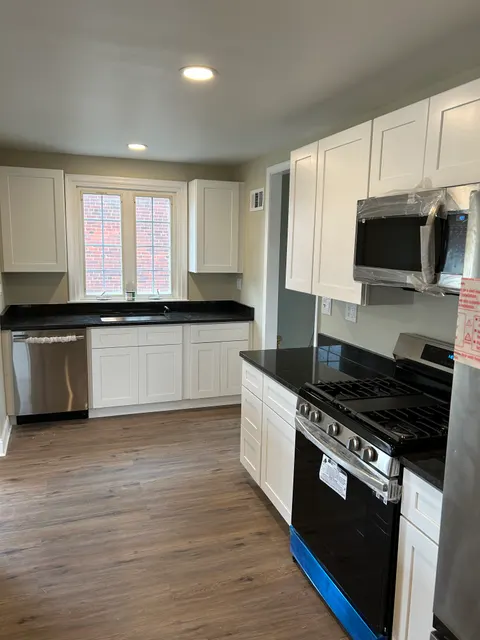
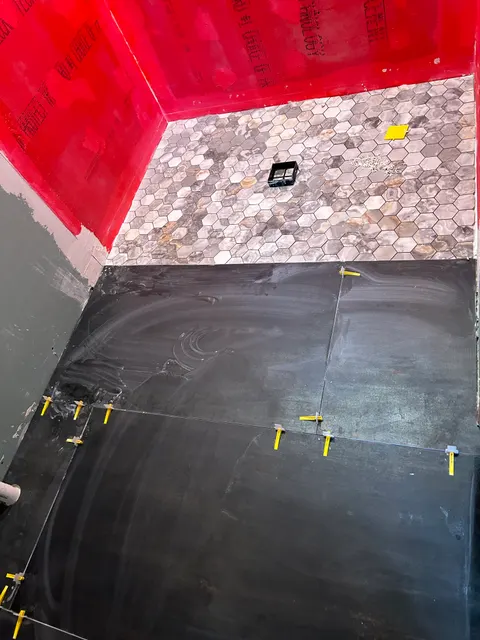
Structural, plumbing and electrical changes like these are where inspections come in. Browse the project gallery.
Remodeling permit questions
Do I need a permit to replace kitchen cabinets and countertops?
Generally not, if nothing moves. Swapping cabinets and counters in place is finish work. Moving the sink, adding circuits or removing a wall is not, and some townships list a permit for direct-replacement kitchen remodels, so confirm locally.
What is a Philadelphia EZ permit?
An L&I permit issued without submitted plans for defined, non-structural projects, mostly in one-family homes. There are EZ standards for kitchen and bath alterations, general alterations, decks, windows and doors, and more. Many issue in about 5 business days.
Who pulls the permit, me or the contractor?
Either can apply, but it's normally the contractor, since they know the scope. In Philadelphia, plumbing and electrical permits go through licensed trade contractors. On our jobs, we pull the permit and schedule inspections.
How much does a remodeling permit cost?
It depends on the municipality and project. Montgomery Township charges $150 for alterations up to $7,000 of estimated cost plus $10 per additional $1,000. Philadelphia charges $76 for the first 500 square feet of a one- or two-family alteration plus $56 per extra 100 square feet. Pennsylvania adds $4.50 per permit.
Do I need a permit for a deck in Montgomery County?
Under the UCC, an uncovered deck whose floor is 30 inches or less above grade is exempt, but your township may still require zoning approval. Higher or covered decks need a building permit.
Sources
- 34 Pa. Code § 403.62, UCC permit requirements and exemptions
- Philadelphia L&I: Get a building permit and EZ permits
- L&I EZ permit standards and construction permit fees
- Montgomery Township 2026 fee schedule and Lower Providence Township permits
Rules and fees change. Confirm current requirements with L&I or your township before you start.